
A traffic camera, a storefront system, or a truck’s onboard equipment may help explain a collision. Those records do not necessarily remain available until an injured person finishes treatment or decides to pursue a claim.
Evidence preservation deserves early attention. The goal is to identify the source, describe the relevant event, and take appropriate steps to prevent routine deletion while the claim is evaluated.
Start with what you can identify safely
Write down the exact location, approximate time, direction of travel, and vehicles involved. Save the police incident number. If you noticed nearby businesses, buses, delivery vehicles, or homes with cameras, record their locations without entering private property or placing yourself in traffic.
Not every visible camera records footage. Not every recording captures the useful angle. A prompt inquiry can establish whether a potential source exists before time is spent making assumptions.
Protect your own original files
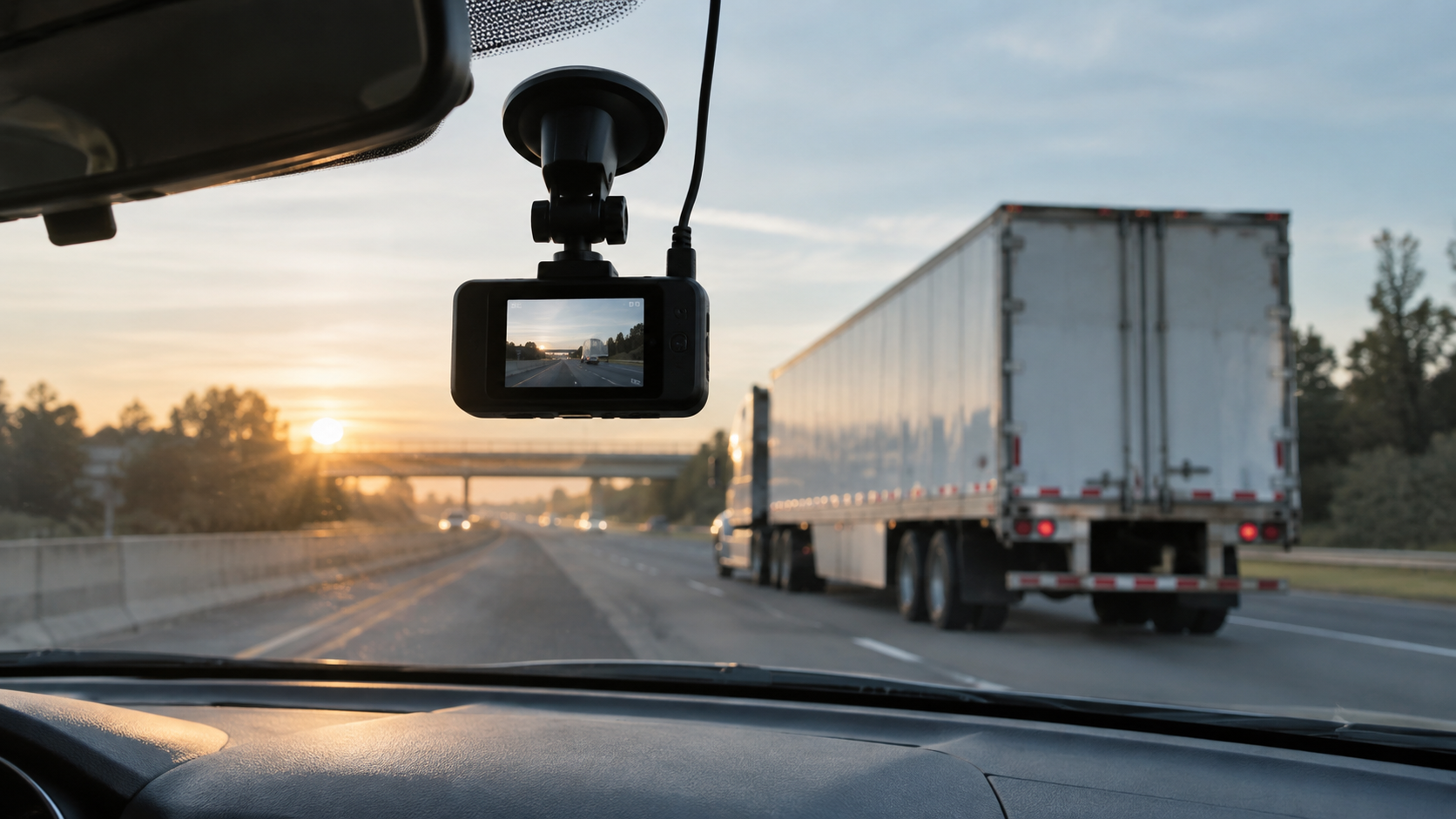
If you have dashcam footage, follow the device’s instructions to prevent overwriting. Preserve the original file and a separate working copy. Keep the surrounding sequence, not just a few seconds selected because they appear favorable.
- Retain the original filename and available date information.
- Note any known difference between the device clock and actual time.
- Save photographs in their original format when possible.
- Keep a record of who supplied each file.
- Do not crop, annotate, or re-encode the only remaining copy.
A short clip shared through a messaging app may lose quality or context. Give counsel access to the original through an appropriate transfer method and explain how it was obtained.
Commercial crashes can involve additional records
A truck collision may involve driver duty records, dispatch communications, maintenance information, onboard video, and vehicle data. Which records exist depends on the operator, vehicle, equipment, and applicable rules.
For example, 49 C.F.R. § 395.8 includes a six-month retention requirement for covered duty-status records and supporting documents. That rule does not establish a six-month preservation window for every kind of truck evidence. Video and other data may follow different retention practices.
A preservation request needs useful detail
Counsel can assess who should receive a request and which categories of evidence to identify. The date, location, vehicle identifiers, and a reasonable description of the event help the recipient locate the material. An overbroad demand for every record a company has may be less useful than a request tied to the collision.
A preservation letter is not a subpoena and does not guarantee voluntary production. Obtaining the records may require further legal steps. Keep copies of requests, delivery information, and responses.
Preserve facts that may complicate the claim too
Keep relevant messages, photographs, and recordings even if they raise difficult questions. Deleting unfavorable material can damage the evaluation and create additional legal issues. A reliable assessment requires the complete available record.
The firm’s Maryland personal injury practice can help identify early evidence needs. Request a consultation with the crash date, location, and any known recording sources while preservation steps may still be effective.
General legal information, not advice for a particular matter. Reviewed September 16, 2026. Featured image: AI-generated editorial illustration.